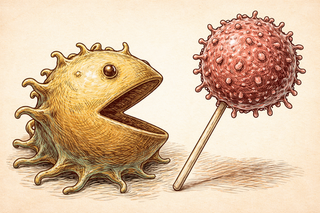
A lab tech in Boston slides a 96-well plate under the microscope, each tiny well containing human leukemia cells lounging next to freshly isolated macrophages - the immune system's hungriest enforcers. In some wells, the macrophages are going full Pac-Man, gobbling up cancer cells left and right. In others? The leukemia cells are just... sitting there, totally unbothered, like a cat ignoring you from across the room. The difference between the eaten and the untouchable comes down to something nobody expected: sugar.
The Bodyguard That Wasn't
For years, cancer immunology had a celebrity molecule: CD47. This surface protein sends a "don't eat me" signal to macrophages, and it became a hot therapeutic target. Gilead poured billions into magrolimab, an anti-CD47 antibody, only to watch their clinical trials crash and burn - the FDA slapped a full clinical hold after the drug showed futility and actually increased the risk of death in AML patients.
So what went wrong? A team led by Todd Golub and Mounica Vallurupalli at Dana-Farber, the Broad Institute, and Mass General Brigham decided to stop guessing and start screening. They ran a genome-wide CRISPR knockout screen - systematically deleting genes in human AML cells one by one, then tossing them into a cage match with human macrophages to see what happened (Chung et al., 2026).
Here's the plot twist: CD47 barely mattered. It shut down mouse macrophages just fine, but human macrophages basically shrugged at it. Years of drug development may have been chasing a signal that was mostly a mouse thing. Ouch.
Meet CD43, the Sticky Bouncer
What the screen did find was that genes controlling O-linked glycosylation and sialylation - pathways that coat proteins in sugar chains capped with sialic acid - were among the strongest regulators of whether macrophages could eat leukemia cells. And the protein carrying most of that sugary armor? CD43, a mucin-like glycoprotein that sticks way out from the cell surface like a molecular lollipop (Chung et al., 2026).
Think of it this way: if the leukemia cell is a nightclub, CD43 is that impossibly tall bouncer coated in maple syrup. Immune cells can't get a grip. They literally cannot make the close contact needed to do their jobs.
The key detail is that it's not the CD43 protein itself doing the blocking - it's the sugar decorations. When the researchers stripped the sialic acid residues or shortened CD43's ectodomain (the part sticking out from the cell), macrophages could suddenly gobble up leukemia cells again. The protein without its sugar coat is just a stick. With it? An impenetrable force field.
Not Just Macrophages Getting Played
Here's where it gets really interesting. The researchers found that CD43's sugar shield doesn't just fool macrophages - it blocks natural killer cells and T cells too. That means sialylated CD43 isn't just a "don't eat me" signal. It's a full-spectrum immune cloaking device, what the team calls a "glyco-immune barrier." Both the innate immune response (macrophages, NK cells) and the adaptive one (T cells) get stiff-armed.
This fits with a growing body of research showing that the glycocalyx - the sugar-rich coat surrounding cancer cells - is a major player in immune evasion. A 2024 study in Nature Materials showed that NK cell killing was inversely correlated with glycocalyx thickness: thicker sugar coat, less killing. Cancer cells are basically wrapping themselves in molecular bubble wrap.
Why This Matters (Beyond Being Cool Science)
AML is brutal. Five-year survival rates hover around 30%, and immunotherapy approaches that have transformed treatment of solid tumors haven't gained the same traction in leukemia. If CD47-targeting was a dead end - or at least not the right address - then CD43 and its glycosylation machinery offer a genuinely new door to knock on.
The researchers showed that when you knock out CD43 or target it with antibodies, human macrophages from both healthy donors and AML patients can suddenly eat primary leukemia blasts again. That's not a mouse model result. That's human cells, from actual patients, doing the thing we need them to do.
And because CD43's barrier affects multiple immune cell types, therapies targeting this axis could potentially enhance not just phagocytosis but also T cell and NK cell responses - the kind of multi-pronged immune activation that actually moves the needle in cancer.
The Bottom Line
Leukemia cells have been running a con. While the entire field was focused on CD47 as the master immune escape artist, AML cells were quietly hiding behind a sugar-coated fence made of sialylated CD43. Now that the disguise has been spotted, the race is on to strip it away.
References:
-
Chung, J., Vallurupalli, M., Noel, S., et al. (2026). Sialylated CD43 forms a glyco-immune barrier that restrains antileukemic immunity. Science. DOI: 10.1126/science.ady5196. PMID: 41955354
-
Ghasempour, S. & Freeman, S.A. (2023). The glycocalyx and immune evasion in cancer. The FEBS Journal, 290(1), 55-65. DOI: 10.1111/febs.16236. PMID: 34665926
-
Baldominos, P., et al. (2024). Immunoengineering can overcome the glycocalyx armour of cancer cells. Nature Materials, 23(3), 429-438. DOI: 10.1038/s41563-024-01808-0. PMID: 38361041
-
Stanczak, M.A., et al. (2018). Sialic Acid Blockade Suppresses Tumor Growth by Enhancing T-cell-Mediated Tumor Immunity. Cancer Research, 78(13), 3574-3588. DOI: 10.1158/0008-5472.CAN-17-3376
-
Jalil, A.R., et al. (2020). Insights into the role of sialylation in cancer progression and metastasis. British Journal of Cancer, 126, 1-10. DOI: 10.1038/s41416-020-01126-7
Disclaimer: The image accompanying this article is for illustrative purposes only and does not depict actual experimental results, data, or biological mechanisms.