---
title: "Your Cells Are Running a Calcium Heist - And Scientists Just Figured Out How to Use It Against Cancer"
date: 2026-04-13
tags: [calcipoptosis, calcium signaling, immunotherapy, nanotechnology, cancer research]

# Your Cells Are Running a Calcium Heist - And Scientists Just Figured Out How to Use It Against Cancer

Running a restaurant kitchen and keeping a cell alive have more in common than you'd think. Both depend on moving the right ingredients to the right station at exactly the right time - and both descend into absolute chaos when someone leaves the walk-in freezer door open. In your cells, calcium is that ingredient, and the "freezer" is your endoplasmic reticulum. A team of researchers just figured out how to prop that door wide open inside cancer cells, flood their internal machinery with calcium, and let the resulting meltdown call in the immune system like a five-alarm fire.

## The Calcium Tightrope Walk

Your cells are obsessive about calcium balance. The endoplasmic reticulum (ER) hoards calcium ions the way a dragon hoards gold, keeping cytoplasmic levels absurdly low - we're talking ten-thousand-fold concentration differences across a single membrane [(Bhatt et al., 2023)](https://pmc.ncbi.nlm.nih.gov/articles/PMC11679949/). Right next door, mitochondria sit ready to sponge up any calcium that leaks out, using specialized channels called the mitochondrial calcium uniporter (MCU). This whole ER-to-mitochondria calcium pipeline runs through physical contact points called MAMs - mitochondria-associated ER membranes - and it's one of the most tightly policed supply chains in biology.

When it works, calcium shuttling powers your metabolism and keeps cells humming along. When it doesn't? Mitochondria choke on calcium overload, their membranes crack open, and the cell spirals into death. Scientists have started calling this calcium-triggered demolition "calcipoptosis," and it turns out to be spectacularly useful if you can aim it at the right target [(Bhatt et al., 2023)](https://pmc.ncbi.nlm.nih.gov/articles/PMC11679949/).

## Hijacking the Shuttle: A Nanoparticle With a Plan

Previous attempts to weaponize calcium against tumors involved dumping external calcium into cancer cells - basically throwing buckets of water at the problem. It worked, sort of, but controlling the dose was a nightmare and healthy cells got caught in the crossfire [(Liu et al., 2024)](https://pmc.ncbi.nlm.nih.gov/articles/PMC10902152/).

Chen Cheng and colleagues at Chongqing Medical University took a radically different approach. Instead of shipping calcium in from outside, they built a modular peptide-programmed nanoagonist that turns the cell's own calcium stockpile into a weapon. Their nanoparticle does two things simultaneously under ultrasound activation: it stresses the ER into dumping its calcium reserves and pries open the mitochondrial calcium channels that normally regulate uptake. The result is an internal calcium tsunami - the ER empties, the mitochondria drown, and the cell tears itself apart through caspase-dependent apoptosis [(Cheng et al., 2026)](https://doi.org/10.1002/adma.202518631).

Think of it as convincing the restaurant kitchen to throw all its frozen inventory into the deep fryers at once. The fryers weren't built for that. Things catch fire.

## The Immune System Gets an Invitation

Here's where it gets really wild. When cancer cells die this messy, calcium-soaked death, they spill their guts - literally. The dying cells release a cascade of damage-associated molecular patterns (DAMPs), which are basically molecular distress flares. Calreticulin flips to the cell surface screaming "eat me" to passing immune cells, while other signals recruit dendritic cells that mature and start training cytotoxic T-cells to hunt down remaining tumor cells [(Kroemer et al., 2022)](https://doi.org/10.3389/fimmu.2024.1390263).

But the immune boost doesn't stop there. The calcium chaos also polarizes tumor-associated macrophages from their lazy, tumor-friendly M2 state into aggressive, pro-inflammatory M1 warriors. And in a twist that reads like science fiction, the calcium overload physically stiffens the cancer cells, making them easier for immune cells to grab and destroy. The researchers call this dual effect "biochemical and mechanical immunosurveillance," and it's as cool as it sounds [(Cheng et al., 2026)](https://doi.org/10.1002/adma.202518631).

## From Petri Dish to (Maybe) Patients

The nanoagonist was tested in mouse models of both breast cancer and liver cancer, where it crushed primary tumors and suppressed metastatic growth - all without the systemic toxicity that plagues so many cancer therapies. Because the calcium comes from inside the cell rather than an external payload, the dosing problem that haunted earlier approaches essentially evaporates.

The ultrasound activation adds another layer of precision. No ultrasound, no calcium flood. That means healthy tissue outside the treatment zone stays calm while the tumor neighborhood descends into calcium-fueled pandemonium.

## Why This Matters Beyond the Lab

Cancer immunotherapy has been the biggest story in oncology for the past decade, but getting immune cells to actually show up and fight inside solid tumors remains brutally difficult. The tumor microenvironment is essentially a fortress designed to keep your immune system out. What this research demonstrates is a way to blow the gates open from the inside - using the tumor's own cellular machinery against it and then letting the immune system storm in to finish the job.

We're still in preclinical territory, and mouse results don't always translate to human clinics. But the elegance of turning endogenous calcium against cancer - rather than relying on external agents - addresses real limitations that have stalled other approaches. If this strategy holds up, it could reshape how we think about combining nanotechnology with immunotherapy.

Your cells already have everything they need to destroy a tumor. Sometimes they just need a little push.


## References

1. Cheng, C., Hou, S., An, H., Du, C., Wang, Z., Ran, H., Zhou, Z., Jiang, W., & Ren, J. (2026). Igniting Endogenous Calcipoptosis via ER-Mitochondrial Calcium Shuttle Hijacking for Potent Antitumor Immunity. *Advanced Materials*. [DOI: 10.1002/adma.202518631](https://doi.org/10.1002/adma.202518631) | [PubMed](https://pubmed.ncbi.nlm.nih.gov/41934190/)

2. Bhatt, D.L., et al. (2023). The Impact of Calcium Overload on Cellular Processes: Exploring Calcicoptosis and Its Therapeutic Potential in Cancer. *Cureus*. [PMCID: PMC11679949](https://pmc.ncbi.nlm.nih.gov/articles/PMC11679949/)

3. Liu, Y., et al. (2024). Application of Calcium Overload-Based Ion Interference Therapy in Tumor Treatment: Strategies, Outcomes, and Prospects. *Theranostics*. [PMCID: PMC10902152](https://pmc.ncbi.nlm.nih.gov/articles/PMC10902152/)

4. Kroemer, G., et al. (2024). Emerging Role of Immunogenic Cell Death in Cancer Immunotherapy. *Frontiers in Immunology*. [DOI: 10.3389/fimmu.2024.1390263](https://doi.org/10.3389/fimmu.2024.1390263)

5. Bhatt, A., et al. (2022). Calcium Homeostasis and Cancer: Insights from Endoplasmic Reticulum-Centered Organelle Communications. *Trends in Cell Biology*. [DOI: 10.1016/j.tcb.2022.07.004](https://doi.org/10.1016/j.tcb.2022.07.004)


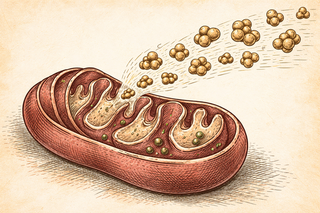
*Disclaimer: The image accompanying this article is for illustrative purposes only and does not depict actual experimental results, data, or biological mechanisms.*
Get cancer research delivered to your inbox
The best new studies, explained without the jargon. One email per week.